
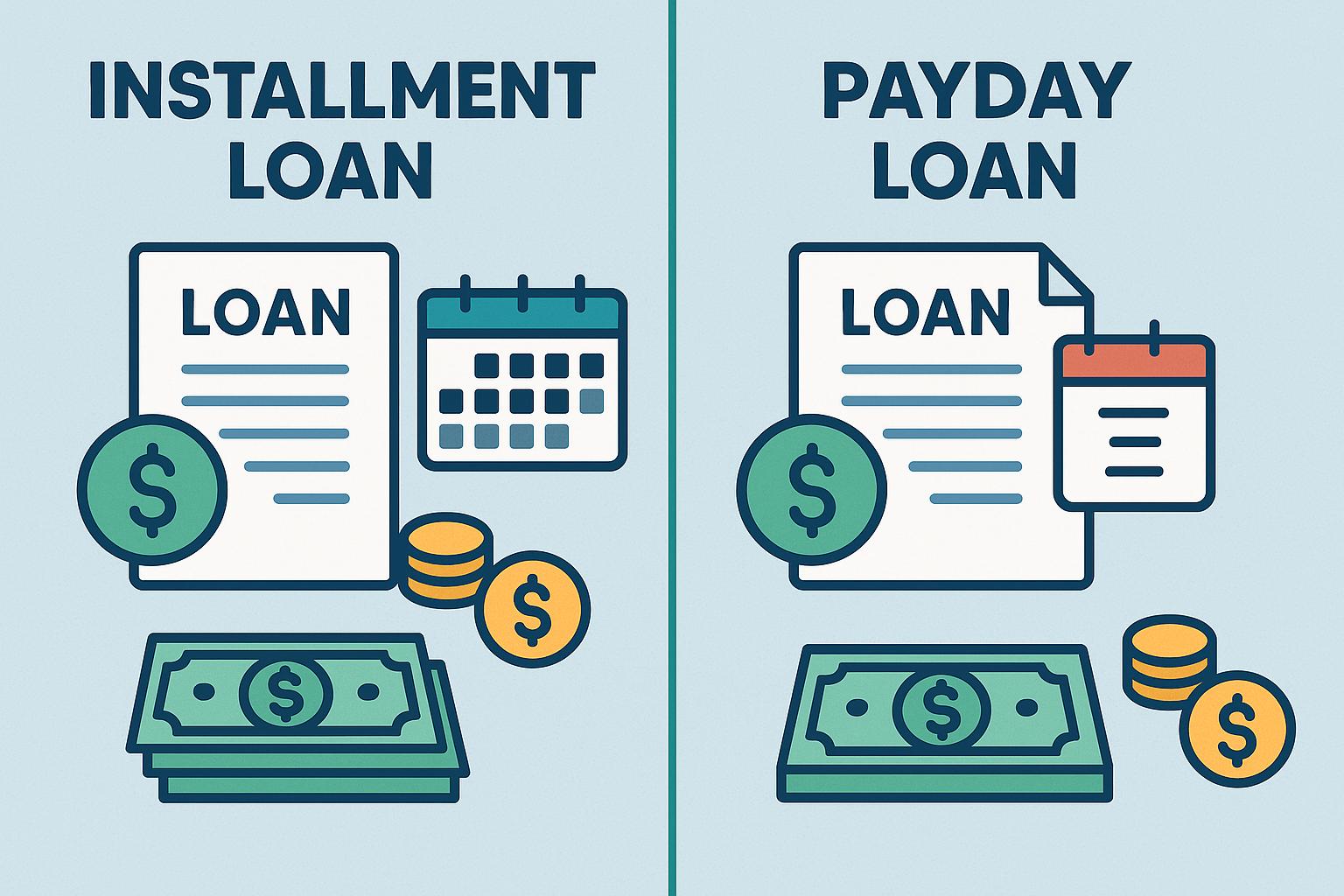
How installment loans differ from payday loans.
Understanding Installment Loans and Payday Loans
In today’s financial landscape, borrowing options are diverse, offering potential solutions for a variety of personal financial situations. Among the most commonly discussed loan types are installment loans and payday loans. Each has its distinct features, intended purposes, and financial implications. A detailed understanding of these differences is vital for making informed decisions when seeking loans to solve immediate or long-term financial needs.
Structure and Purpose
Installment Loans are financial products structured to be repaid over a specific period through a series of regular, often monthly, payments. This loan type is primarily used for substantial purchases or investments, including homes, vehicles, or significant household appliances. At the start of the loan agreement, the total loan amount, the interest rate, and the repayment term are clearly defined. This clear structuring of payments allows borrowers to manage their financial responsibilities more effectively, knowing exactly how much they need to pay each month.
On the flip side, Payday Loans are designed to meet short-term financial needs that arise suddenly and require urgent attention. These loans are generally for smaller amounts, aligning with immediate financial gaps that need filling. The repayment is expected in a lump sum, along with any associated fees, by the time the borrower receives their next paycheck. Payday loans are particularly popular among individuals who find it challenging to access traditional credit facilities, opting instead for the ease and speed these loans provide. However, the high-interest rates and substantial fees linked to payday loans can considerably increase the cost for borrowers over time, highlighting a significant downside despite their accessibility.
Interest Rates and Fees
The interest rates associated with installment loans are typically lower than those linked to short-term borrowing solutions. When installment loans are secured, meaning backed by an asset such as property or a vehicle, the interest rates can be even more favorable. Options range between fixed and variable interest rates, affecting how much borrowers ultimately pay. Generally, individuals boasting a strong credit score obtain more competitive rates, making installment loans an economically sound option for eligible borrowers.
Conversely, payday loans are notorious for their excessive interest rates and additional fees. As mentioned by the Consumer Financial Protection Bureau, these rates can escalate to an APR of 400% or more, making payday loans an incredibly costly borrowing choice over extended periods. The nature of payday loans, usually unsecured with limited collateral from borrowers, contributes greatly to these high charges as lenders attempt to mitigate their risk.
Eligibility and Accessibility
The eligibility criteria for installment loans tend to be stringent, requiring a detailed evaluation of the potential borrower’s creditworthiness and overall financial health. Lenders typically assess credit scores, income stability, and existing financial commitments to ensure that the applicant can comfortably manage repayments. As a consequence, individuals with strong financial histories and robust credit scores are more likely to qualify for installment loans with advantageous terms.
However, the process for obtaining a payday loan is much simpler, predominantly due to minimal credit checks and reduced documentation requirements. The basic requirement is often just proof of a steady income, which makes payday loans appealing to those with poor credit histories who still need immediate cash inflow. While this accessibility is beneficial in emergencies, it does expose borrowers to higher financial liabilities and greater susceptibility to spiraling into debt cycles due to the unfavorable loan terms.
Repayment Terms
Repayment plans for installment loans can vary extensively, spanning from a couple of months to several years, thereby allowing borrowers the flexibility to manage smaller, predictable payments comfortably. This extended repayment period provides the assurance and ability to budget wisely over time, preventing financial strain on the borrower’s resources.
In contrast, payday loans require a rapid repayment cycle, often aligning with the borrower’s next pay period, which is typically within two weeks. The combination of high fees and the demand for quick repayment can trap borrowers, especially those already in financially precarious positions, into a cycle where they are compelled to seek new loans just to cover previous ones.
Conclusion
To sum up, both installment loans and payday loans offer solutions to individuals in urgent need of finance, yet they come with distinct differences that impact their desirability and affordability. Installment loans, with their structured repayment schedules and lower interest rates, are generally more favorable for long-term financial planning. On the other hand, payday loans provide immediate cash at a significant financial premium, reflective of their high interest costs and rapid repayment requirements. Being fully informed of the intricacies of each loan type is imperative for borrowers as they assess which product aligns with their specific financial needs, ensuring their choice supports their financial health over time.