
Day trading in debt
Day trading is often presented as a test of skill, discipline and speed. Debt adds another consideration: whether a trading loss will affect your ability to meet existing obligations. Interest continues to accrue and payment dates continue to arrive regardless of market conditions. A loss that would otherwise be disappointing can become a household problem when the money was needed for rent, a loan installment or an unexpected expense.
I recommend against day trading while in debt, particularly when borrowing is expensive or repayments are already difficult. This article recognises that some people will proceed despite that advice. It explains how borrowing, execution costs and financial pressure interact, and how to avoid decisions that can deepen the problem. It is not a plan for trading your way out of debt. Affordable repayment arrangements and reliable income should remain independent of speculative results.
We chose DayTrading.com as an educational source because it also promotes responsible trading, including risk awareness, setting boundaries and recognising when trading becomes harmful. Its material can help readers understand markets and the dangers of chasing losses. That is my reason for including the resource; I am not speaking on its behalf or suggesting that it endorses trading to repay debt. No website can teach away the uncertainty of future returns.
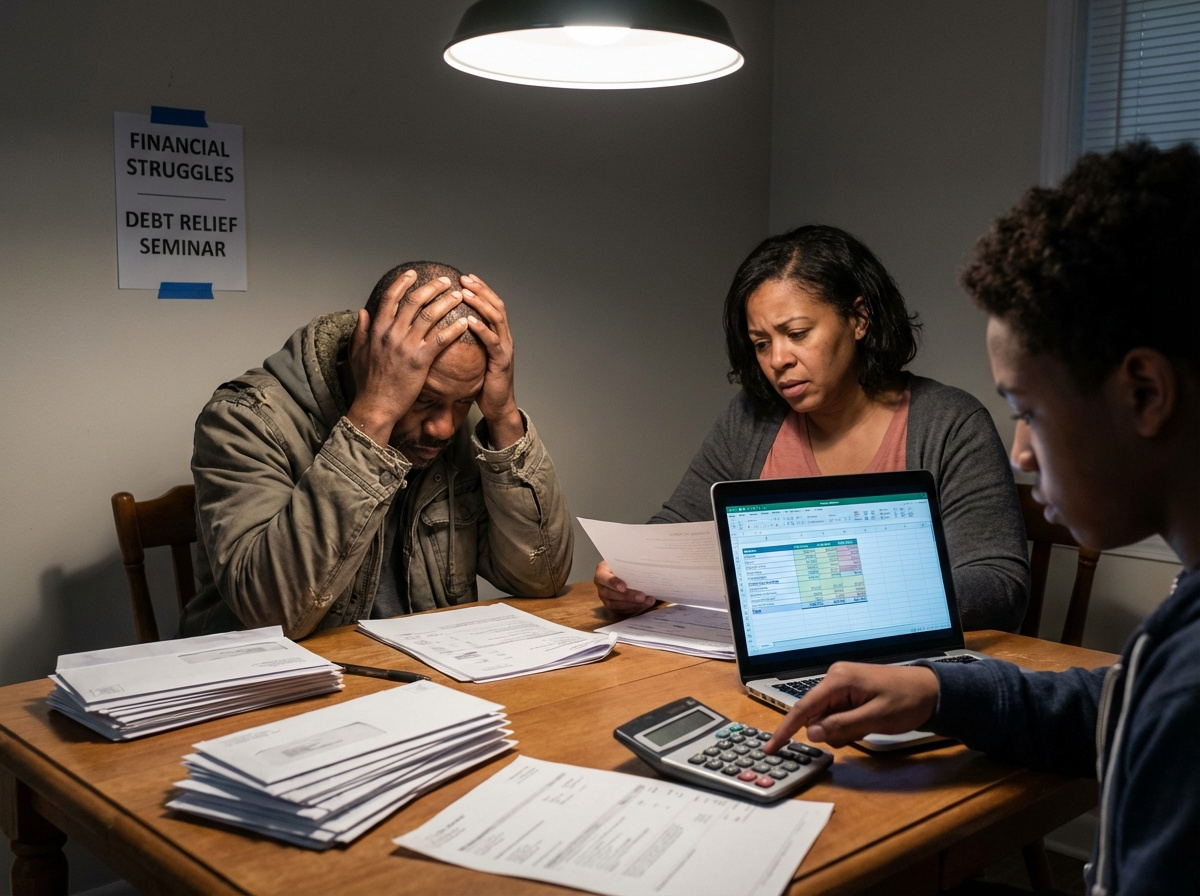
Why debt changes the consequences of day trading
Debt does not change the price a market will quote you. It changes how much financial room you have when a trade goes wrong. An affordable mortgage and overdue high-interest borrowing are different situations, but neither creates a reason to expect trading profits. The relevant issues are the cost of borrowing, repayment commitments, available reserves and the effect of losing the money you intend to trade.
There is an opportunity cost whenever cash goes into speculation instead of an appropriate reserve or debt repayment. Reducing an interest-bearing balance can lower future interest charges, subject to the agreement, repayment timing and any fees. That benefit does not depend on predicting a market movement. However, urgent household obligations and essential liquidity may take priority over making extra payments on an unsecured loan. If you cannot meet everything, seek debt advice about the order in which to act.
A trading loss does not automatically increase the principal of an existing loan. It reduces your assets while leaving that obligation in place. Debt can then grow if you borrow to replace the money, use credit to cover living costs or incur additional charges. This distinction matters: even before borrowing rises, losing savings can weaken your financial position and remove the buffer that previously kept payments manageable.
The trading mechanics that can amplify the damage
Margin and forced liquidation
In a securities margin account, a broker lends money against eligible account assets. Initial margin determines the equity required to establish exposure, while maintenance requirements govern the equity needed to support it. If the account falls below the required level, the broker may demand additional funds or liquidate positions. Do not assume you will receive a warning or time to respond: account terms can permit sales without prior notification, and requirements can change.
Consider $5,000 of your own money combined with a $5,000 margin loan to buy $10,000 of shares. If the shares fall 20%, they are worth $8,000. After subtracting the loan, your equity is $3,000: a 40% loss before costs. The example assumes the position remains open through that move. Actual liquidation depends on the requirements and account terms. A forced sale can occur at an unfavorable price, but it is not necessarily the worst price or proof that waiting would have produced a recovery.
Borrowing costs continue independently of results
The interest on a personal loan or credit line does not disappear when you close a trade. Broker financing arrangements vary by product and account, including how interest is calculated and when charges apply. An intraday position does not necessarily incur the same financing charges as one held overnight, but money borrowed externally can still cost you throughout the period it remains outstanding. Read the actual terms rather than applying a single assumed rate to every type of trading.
Slippage, stops and unavailable exits
A stop-loss order usually sets a trigger, not a guaranteed execution price. When triggered, an ordinary stop becomes a market order and may fill at a worse price during a fast move or price gap. A stop-limit order constrains the acceptable price but may not execute. Trading halts, connection failures and thin liquidity create further difficulties. For someone relying on the account to make a payment, an execution problem can have consequences well beyond that individual trade.
Short selling and derivatives
Short selling shares involves borrowing stock, with costs and availability governed by the arrangement. Borrow fees can change, and a recall can require the position to be closed. Because a share price can keep rising, an uncovered short stock position has theoretically unlimited price risk. A collection of small short positions should not be treated as a safe substitute for one large position, particularly when all could react to the same event.
Options and other derivatives need their own risk assessment. Buying a standalone option can lose the premium paid, while exercise can create further obligations. Some option-selling strategies can produce much larger losses and require margin. Time decay, implied volatility and wide spreads can affect results even when the underlying asset moves in the anticipated direction. Futures margin is performance collateral rather than simply the price of an asset purchase. A small initial payment can support substantial exposure.
How repayment pressure can distort decisions
When a payment is approaching, it is tempting to replace the question “Does this trade fit my plan?” with “Could this trade produce the money I need?” That shift can lead to larger positions, unnecessary trades or holding losses longer than intended. It does not happen to every indebted trader, but it is a warning sign worth recognising. A required payment amount provides no information about whether the market will move in your favor.
Hiding losses from a partner, repeatedly adding deposits or staying awake to monitor positions can delay corrective action. A journal may help reveal these patterns, but it cannot guarantee self-control. If trading feels compulsive or you are chasing losses, pause, reduce access and seek appropriate support. You do not have to recover the money through the activity that lost it, and stopping does not require waiting until the account returns to its previous high.
Practical math: losses, interest and recovery
A loss requires a larger percentage gain to recover
If a $10,000 account loses 50%, the remaining balance is $5,000. Returning to $10,000 requires a $5,000 profit, or a 100% gain on what remains. A 20% loss requires a 25% recovery; a 40% loss requires about 66.7%. These calculations exclude costs, taxes and withdrawals. The arithmetic explains why increasing risk to recover quickly can be so damaging: the account is smaller while the desired dollar recovery is unchanged.
Separate existing debt costs from new trading costs
Suppose someone has $10,000 of consumer debt carrying 18% annual interest and also borrows $5,000 for trading at 8%. Using a simplified calculation with unchanged balances for a full year, those charges would be approximately $1,800 and $400 respectively. Actual amounts depend on repayments, rate changes, compounding and the agreements. The combined $2,200 is a household interest burden, not a complete calculation of the trading strategy’s incremental cost.
The $400 arises from the additional trading borrowing; the original debt interest would exist without that new loan. If available cash could instead reduce the consumer balance, the interest savings forgone also matter to the comparison. Someone hoping to pay both interest bills from trading would need that much available after trading expenses and any tax, without yet reducing principal. Meeting an interest bill would not mean the underlying debt problem had been solved.
Small planned risks do not guarantee survival
Risking a small fraction per trade can slow losses, but it cannot make an unprofitable method profitable. If each loss were exactly 1% of the remaining account, 20 consecutive losses would reduce it by about 18.2%, before other costs. Real losses may exceed the plan, and several positions can lose together. A percentage rule describes how you intend to trade; it does not prove that the money is affordable to lose or that bills can still be paid.
Claims about “risk of ruin” depend on the model, including trade probabilities, position sizing, costs and the definition of failure. A fixed-fraction account need not reach exactly zero to become unusable. Minimum trade sizes, required withdrawals or a household payment can end the activity much sooner. For someone under debt pressure, practical failure may mean missing an essential payment rather than exhausting the brokerage account.
Operational risks: money on a screen is not cash for a bill
Unrealized profit can disappear before a position closes. Realized proceeds may still be subject to settlement, withdrawal checks, margin commitments and banking delays. Buying power shown by a platform is not necessarily withdrawable cash. Do not plan to make a household payment from a trade you hope to close that day. Review withdrawal conditions and maintain repayment funds independently of market activity.
Check the broker’s legal entity and relevant permissions directly with the appropriate regulator. A polished application or a copied registration number does not establish legitimacy. Even an authorised broker cannot remove market risk, and investor protection schemes generally do not reimburse ordinary trading losses. Treat guaranteed-return claims, pressure to deposit and demands for a separate payment to release alleged profits as warning signs requiring independent verification.
Tax obligations need a separate reserve
Tax treatment depends on where you live, the product, the account and the nature of the activity. It is inaccurate to assume all trading profits receive the same treatment or that being active automatically makes you a professional trader for tax purposes. A taxable disposal can matter even if you leave the proceeds with the broker. Loss relief may be restricted or apply at a different time from the liability on earlier gains.
Retain account statements, trade confirmations, fees and transfer records. Distinguish returned capital from genuine gains and review performance across the account rather than selecting profitable trades. Reserve any tax due before applying available money to debt. If you are in a formal debt arrangement, ask the responsible adviser how trading assets, gains and changes in income must be reported or used.
If you proceed despite the warning, set firm financial boundaries
Keep essential living expenses, agreed repayments, emergency reserves and tax money outside trading. Never fund the account through credit cards, loans or money borrowed from other people. My recommendation to avoid borrowing for trading does not have an exception for a promising strategy. A profitable track record cannot guarantee the next result. If losing the committed money would require more borrowing or a missed payment, that money is not available for speculation.
If you trade anyway, record the total cash committed, including subscriptions and other expenses, and set a stopping limit before starting. Do not replenish losses from household funds or reset the limit by changing platforms. Stop opening positions if your income falls, an essential cost appears or you begin breaking your own rules. Consider a demo account for education instead of risking cash; simulated performance still does not establish that live trading will be profitable.
Address the debt without relying on a market recovery
Build a budget that assumes no trading income. If payments are becoming unaffordable, contact creditors about available assistance and seek reputable debt advice or credit counseling in your jurisdiction. Additional dependable earnings, appropriate spending changes and an affordable repayment arrangement can address the problem directly. Long-term stock investing also carries risk and should not be described as a safe place for money needed for near-term debt payments.
I recommend against day trading while in debt. The practical controls in this article are intended to reduce harm for readers who proceed anyway, not to turn speculation into a repayment strategy. If trading has already weakened your position, stop adding money and work from your actual balances rather than the amount you hope to recover. The priority is making household obligations manageable without depending on the next trade.